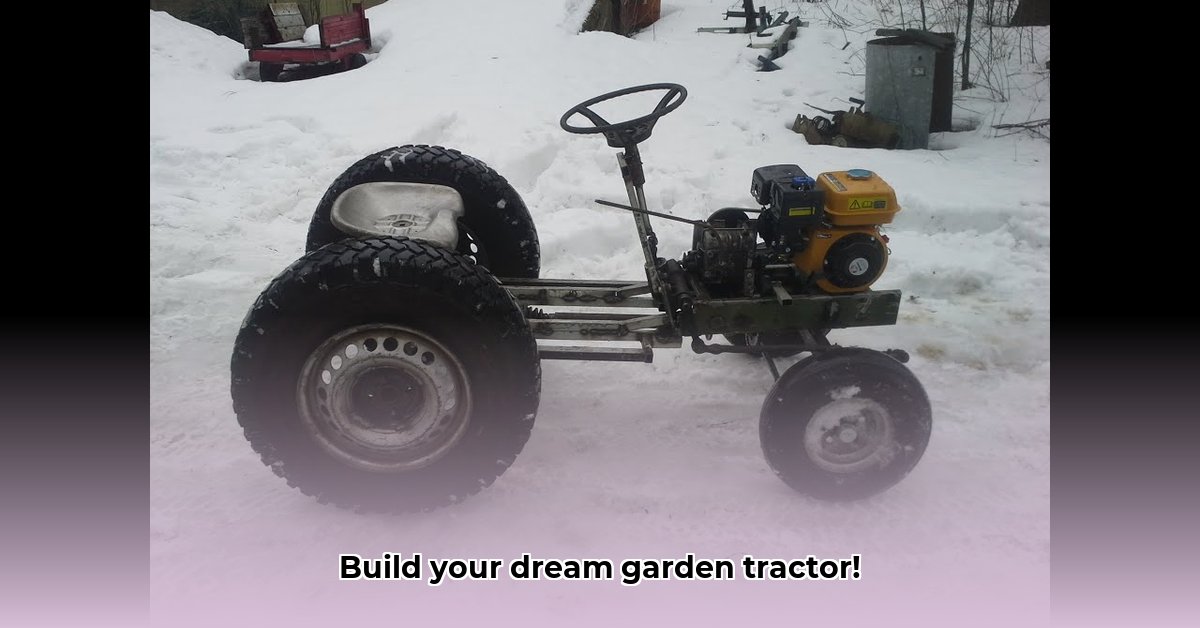
Tired of expensive, gas-guzzling farm equipment? Yearning for a greener, more independent approach to tending your land? Building your own garden tractor could be the perfect project! This guide will walk you through the entire process, from initial planning to ongoing maintenance, making it accessible for both seasoned mechanics and enthusiastic beginners. Want to estimate the cost? Check out this helpful resource on mini tractor build costs. Get ready to embrace a more sustainable and fulfilling path to farming!
Planning & Designing Your Custom Tractor
Before you even grab a wrench, meticulous planning is key. What tasks will your tractor perform? Tilling, hauling, or both? This dictates size, power, and features. Starting with a clear vision ensures your design matches your needs.
Next, explore various tractor designs; numerous online resources like Vintage Projects provide blueprints and plans. Consider your skill level when choosing a design. Think about using readily available, recycled parts (like a used engine from a lawnmower) for a sustainable and affordable build. A reliable transmission system is also crucial for smooth gear changes and efficient operation. Remember, safety is paramount!. Robust materials and dependable brakes are essential investments.
Did you know that using salvaged parts can significantly reduce your project's environmental impact? This sustainable approach can save you money and reduce your carbon footprint.
Here's a checklist to ensure you're well-prepared:
| Tool/Material Category | Specific Items | Important Notes |
|---|---|---|
| Essential Power Tools | Arc Welder, Angle Grinder, Drill, Impact Wrench | Ensure your tools are in good working order and you're comfortable using them. |
| Hand Tools | Adjustable wrenches, sockets, pliers, screwdrivers, levels, measuring tape | Quality tools enhance accuracy and efficiency. |
| Safety Gear | Safety glasses, sturdy work gloves, hearing protection, welding helmet | Prioritize safety; neglecting it can have serious consequences. |
| Engine & Transmission | Used engine (consider smaller, reliable models), Transmission, Drive shafts | Thoroughly inspect used parts; a mechanic's assessment is recommended for critical components. |
| Chassis Construction | Steel tubing, angle iron, welding wire, metal cleaner, primer, paint | Choose durable, weather-resistant materials. |
| Wheels & Tires | Used wheels and tires (inspect for wear) | Ensure tires are in good condition and appropriately sized for your design. |
| Additional Components | Steering components, seat, pedals, lights, wiring, battery, bolts, nuts, washers | Sourcing these might require resourcefulness. |
Step-by-Step Tractor Construction
Constructing your tractor is like assembling a complex puzzle. Patience and a methodical approach are vital. Safety remains crucial throughout the entire process. Always follow safety guidelines for tools and machinery.
Step 1: Frame Construction: Meticulously weld the main frame, ensuring precise alignment. A sturdy frame is the foundation for a stable and functional tractor.
Step 2: Engine & Transmission Mounting: Securely attach the engine and transmission, ensuring precise alignment for optimal power transfer.
Step 3: Axle & Wheel Assembly: Attach axles and wheels, verifying straightness and free rotation.
Step 4: Steering System Installation: Install the steering mechanism, testing for responsiveness and precision.
Step 5: Electrical System Integration: Connect the battery, wiring, and lights for safe operation.
Step 6: Braking System Installation: Install a reliable braking system – essential for safety.
Step 7: Final Assembly: Add the seat, pedals, and other finishing touches.
Customization, Maintenance, and Safety
Congratulations! You've built your tractor! Now for the fun part – customization. Add features, build attachments, and let your creativity soar.
Regular maintenance is crucial for longevity. Regularly check fluid levels (engine oil, transmission fluid), lubricate moving parts, and inspect for wear and tear. Address minor issues promptly to prevent major problems. A well-maintained tractor will serve you faithfully for many years.
Safety First: Emphasize the importance of safety throughout the project, from working with tools to operating the completed tractor. Always wear appropriate safety gear and follow all safety regulations. A safe working environment minimizes risks and ensures a smooth project.
The Rewards of DIY Farming
Building your own garden tractor offers numerous advantages: cost savings, customization, environmental friendliness, and the immense satisfaction of creating something functional and unique. While the process requires time, effort, and mechanical aptitude, the rewards far outweigh the challenges.